
Hood River Fire Department Welcomes New Fire Engine

After three years of planning and waiting, the Hood River Fire Department is proud to announce the arrival of a new fire engine. This upgrade is designed to meet the growing demands of the community while enhancing firefighter safety and effectiveness.
Captain Dave Smith, a 27-year veteran of the department, led the effort as chairman of the New Engine Committee. He was joined by firefighters Marcus VanLaar, Matt Picchiottino, and Karl Smiley, who brought a combination of experience and enthusiasm to the project as committee members. They facilitated conversations with the rest of their team members to involve everyone in the design process.
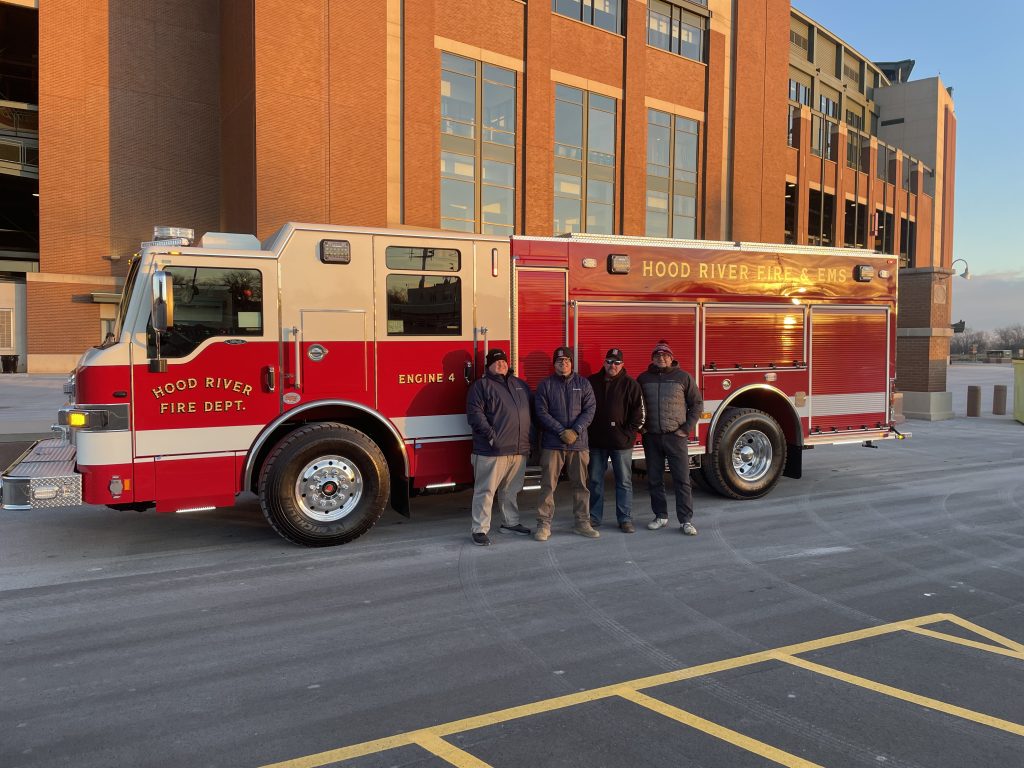
The department once again partnered with Pierce Manufacturing, the trusted maker of the department’s last engine, which was purchased in 2010. Drawing from that successful experience, the new model—a Pierce Ultimate Configuration (PUC)—was designed to mirror the previous engine while incorporating several key upgrades.
Among the most appreciated improvements is a more spacious cab, allowing for greater comfort and additional storage. Another significant addition is a designated gear compartment that allows firefighters’ turnouts (the protective gear they wear) to off-gas after a fire, reducing exposure to harmful, cancer-causing chemicals. The engine also features a more compact pumphouse, which creates additional space for equipment storage while still holding an impressive 750 gallons of water.
The new engine is built to handle Hood River’s hilly terrain, improving response capability in all corners of the city. It will respond to most calls for service and play a critical role in the department’s daily operations. To better enhance safety on the road, the engine is also equipped with a HAAS Alert System, which notifies travelers that there is an emergency vehicle ahead.
The department’s fire engine differs from its tower truck. While the tower is used primarily for commercial and large residential fires—offering elevated access for firefighting—it does not carry water or a pump. The engine, by contrast, carries water, hoses, and key suppression equipment, serving as the primary source of water delivery at a fire scene.
Fire engines in Hood River are typically replaced on a 20-year cycle. After a decade, an engine transitions into reserve, or “second-out” status. Engine 4, the department’s outgoing reserve engine, is now 27 years old. It has served beyond expectations and will be sold as surplus.
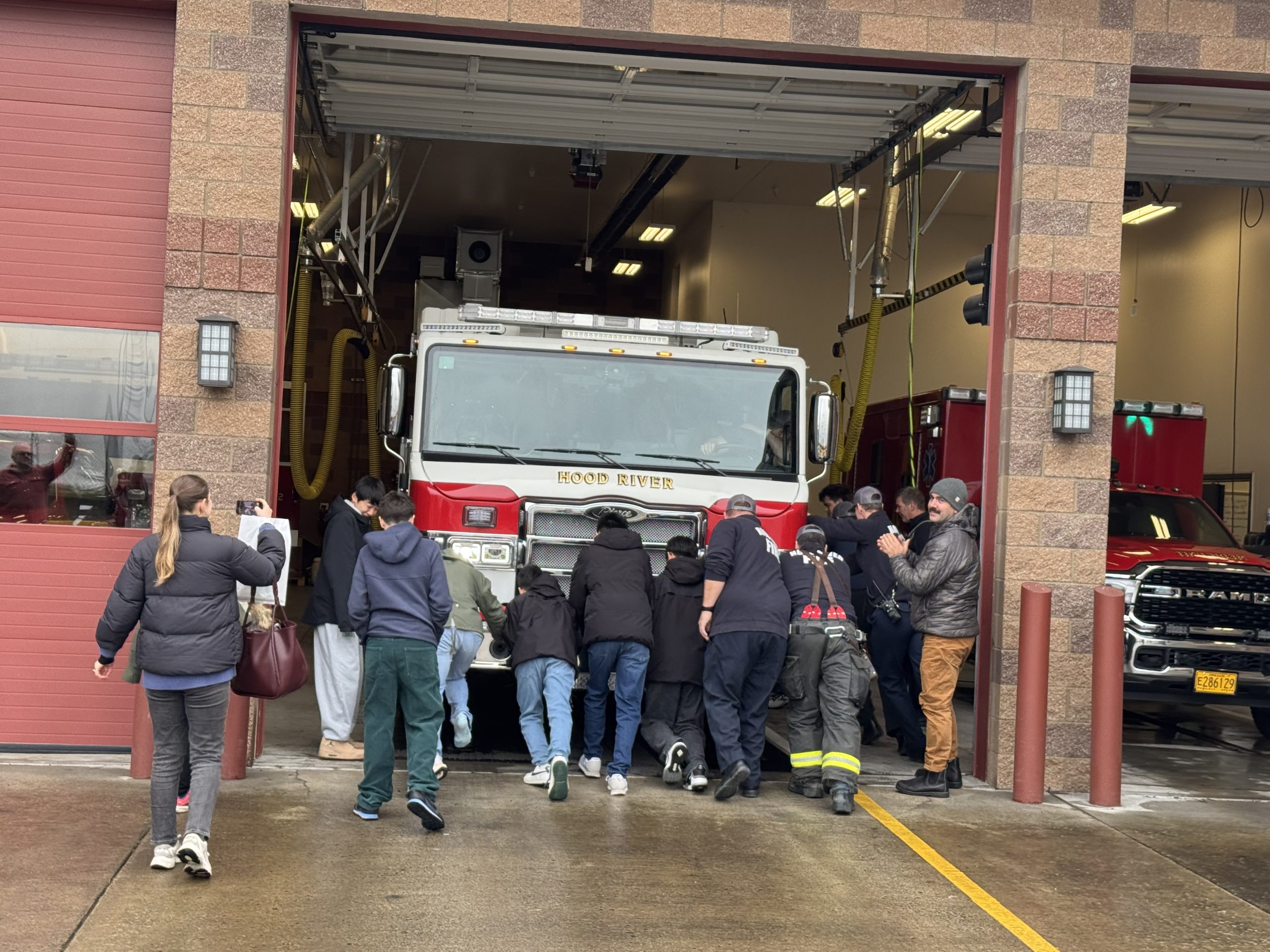
The arrival of the new fire engine coincided with a special visit from students from Hood River’s Sister City, Tsuruta, Japan. To celebrate the occasion, the students joined firefighters in a traditional “push-in” ceremony at the fire station to symbolize the engine’s official entry into service. With this new addition, the Hood River Fire Department continues its commitment to public safety in the City of Hood River and surrounding communities.
Please consider signing up HERE to receive quarterly Emails of future editions of Hood River City Connect.
Si le gusta lo que acaba de leer, considere inscribirse AQUI para recibir correos electrónicos trimestrales de futuras ediciones de Hood River City Connect.